Türkiye Links Polar Research and Zero Waste with London Climate Action Ahead of COP31

Türkiye is seeking to bring together polar science, resource efficiency and international climate cooperation as it prepares to host COP31, with a new study examining zero waste practices in the Arctic and Antarctic alongside a partnership with London Climate Action Week.
The Zero Waste Foundation has announced two initiatives designed to broaden international cooperation around the circular economy and reducing the environmental impact of scientific activity.
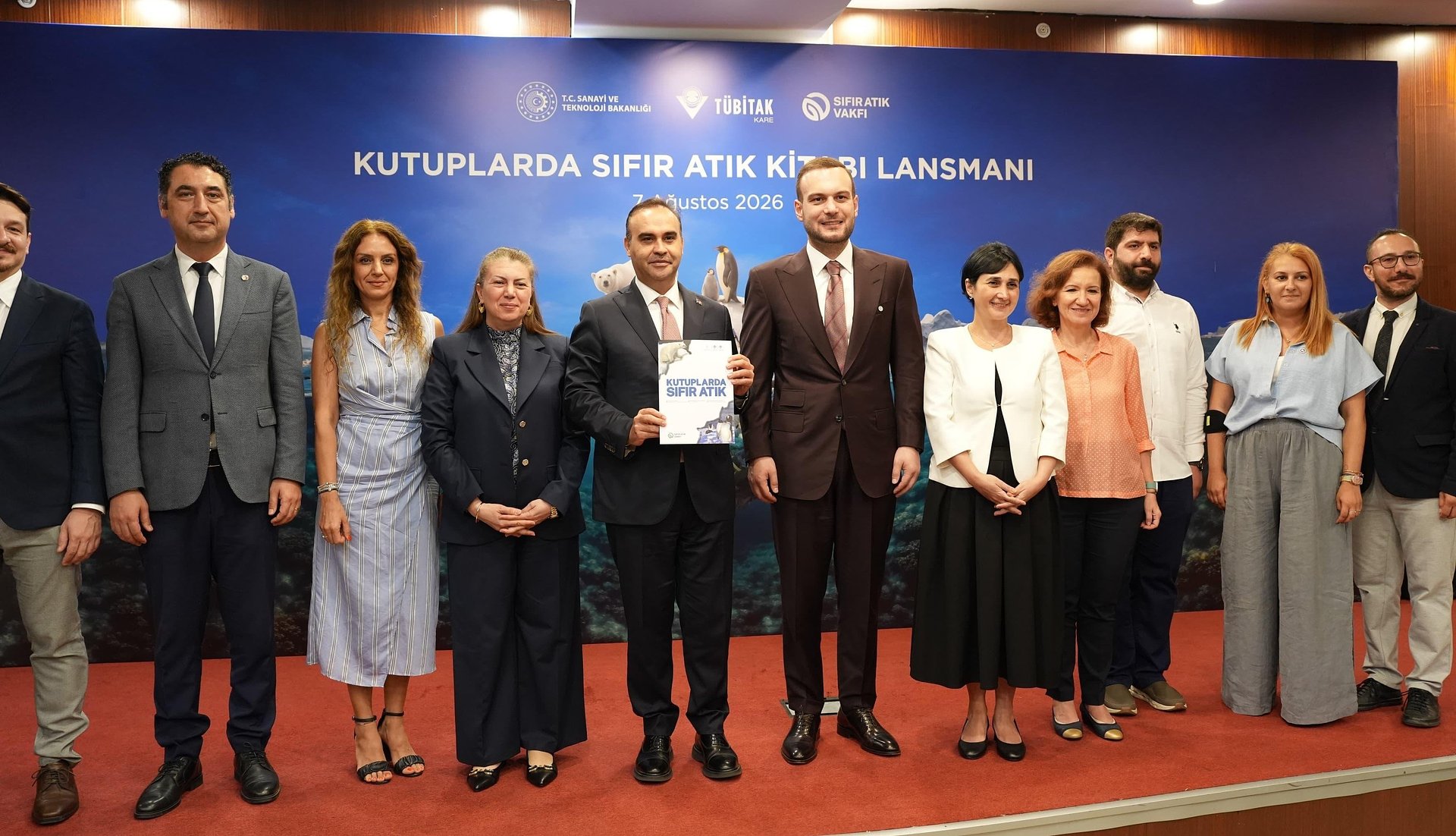
On 7 August, the Foundation launched Zero Waste in the Polar Regions, a book prepared with TÜBİTAK’s Polar Research Institute examining how zero waste principles can be incorporated into scientific work in some of the world’s most environmentally sensitive regions.
Ten days later, the Zero Waste Foundation and London Climate Action Week (LCAW) signed a cooperation protocol covering climate action, zero waste and the circular economy.
Together, the initiatives seek to connect Türkiye’s growing polar research programme with a wider international discussion about how resources are consumed and how waste can be prevented rather than simply managed after it has been created.
 Polar Research Puts Resource Use Under the Microscope
The polar regions are among the places where the effects of global climate change are particularly visible, with changes to ice, oceans and ecosystems having implications extending far beyond the Arctic and Antarctic.
Türkiye’s new publication approaches the issue from another direction: examining the environmental footprint created by the scientific research required to understand those changes.
Zero Waste in the Polar Regions contains 18 articles written by scientists with experience of polar research and covers the scientific, technical, administrative and communication aspects of adopting a zero waste approach.
Rather than concentrating solely on collecting and recycling waste, the publication considers how research expeditions are planned and how materials, energy, water and logistics can be managed more efficiently.
A central theme is preventing unnecessary waste from being created in the first place.
That distinction is increasingly important to the wider circular economy debate. Recycling can reduce the amount of material going to landfill or disposal, but genuine resource efficiency also requires organisations to reconsider what they consume, how products and materials are designed and how long resources remain useful.
Applying those principles to remote scientific expeditions could be particularly valuable because almost everything required for polar research must be transported into — and often out of — exceptionally sensitive environments.
Two Initiatives That Began in 2017
Mehmet Fatih Kacır, Minister of Industry and Technology of Türkiye, said the publication had brought together two significant Turkish initiatives, both of which began in 2017.
“The Zero Waste initiative launched under the leadership of H.E. Emine Erdoğan has grown step by step from a national initiative into a global one,” he said.
“At the same time, we began organising scientific expeditions to Antarctica and the Arctic under the auspices of the President of the Republic of Türkiye, enabling Turkish scientists to strengthen the country’s presence in polar research. Through this book, these two initiatives have come together.”
The work also forms part of the wider zero waste programme associated with Emine Erdoğan, Founder of the Zero Waste Movement, Chair of the UN High-Level Advisory Board on Zero Waste and Honorary President of the Zero Waste Foundation.
London Partnership Broadens International Cooperation
The second development sees the Zero Waste Foundation establishing a formal partnership with London Climate Action Week.
The cooperation protocol is intended to encourage knowledge exchange, collaborative projects and international discussion surrounding zero waste and circular economy approaches.
It was signed by Samed Ağırbaş, President of the Zero Waste Foundation and COP31 High-Level Climate Champion, and Climate Action Founder and CEO Nick Henry.
“After this cooperation protocol, I hope we will carry out strong work and organize joint events at COP31 and London Climate Action Week,” Ağırbaş said.
London Climate Action Week has developed into an international meeting point for governments, businesses, financial institutions, academics, campaigners, cities and community organisations working on climate-related issues.
The agreement therefore gives Türkiye’s zero waste programme an opportunity to engage with a much broader climate network beyond the traditional waste and recycling sector.
COP31 Brings Added Significance
The developments come as international attention increasingly turns towards COP31, which Türkiye is preparing to host.
That gives the partnership a wider diplomatic backdrop, although the organisations say its immediate emphasis will be on practical cooperation and sharing expertise between the Zero Waste Foundation and London Climate Action Week network.
The polar research project could also provide an interesting example of how circular economy principles can be applied to sectors that may not immediately be associated with waste reduction.
Scientific research into climate change inevitably requires resources. Polar expeditions can involve transportation, specialist equipment, temporary infrastructure, energy consumption and supplies operating thousands of miles from conventional support networks.
Reducing the footprint of that work without compromising scientific quality presents its own sustainability challenge.
It also illustrates a wider principle increasingly central to climate and environmental policy: zero waste cannot simply mean dealing more effectively with rubbish once it exists.
Reducing demand for virgin materials, extending the useful life of products, improving efficiency and designing waste out of activities altogether can potentially reduce both environmental damage and greenhouse gas emissions.
By connecting those principles with polar science and London’s international climate network, Türkiye’s latest initiatives aim to position resource efficiency as part of the wider climate conversation ahead of COP31.
Source: Zero Waste Foundation, 7 September 2026
Further information:
Zero Waste Foundation: https://sifiratikvakfi.org/en