Europe’s Severe Summer Storms Bring Almost 900,000 Lightning Flashes
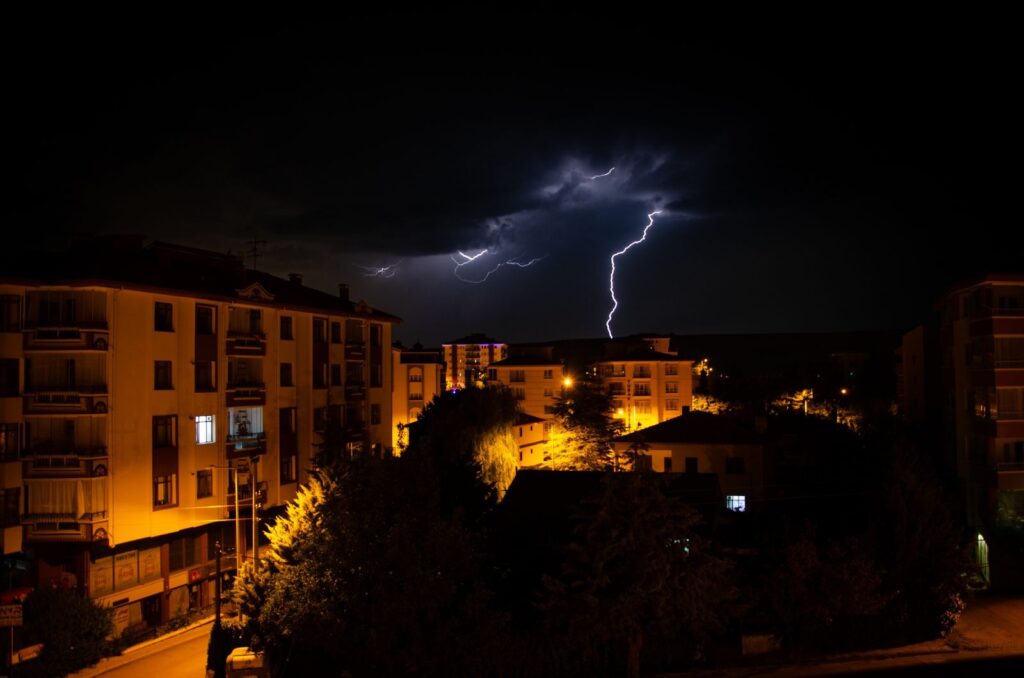
Almost 900,000 cloud-to-ground lightning flashes were recorded across Europe during Summer 2026, as severe thunderstorms brought destructive winds, large hail, intense rain and localised tornadoes.
New analysis from Meteorage, a subsidiary of Météo-France and a leading European lightning detection specialist, identified 893,458 cloud-to-ground flashes between June 1 and August 31.
Although the season was not among the most electrically active recorded in recent years, several powerful outbreaks caused disruption across the continent.
Transport systems, energy networks, farms, outdoor activities, sporting events and critical infrastructure were among those affected.
The UK experienced a comparatively limited level of lightning activity, recording 14,400 cloud-to-ground flashes and ranking eighth in Europe.
UK Lightning Concentrated in June
The Meteorage network detected 10,437 cloud-to-ground flashes across the UK in June alone.
That represented approximately 72% of the entire summer’s total and demonstrated the disproportionate effect of several intense thunderstorm events towards the end of the month.
July was considerably quieter, with only 331 recorded flashes. Activity increased again during August, when 3,632 flashes were detected.
The monthly figures were:
- June: 10,437 flashes
- July: 331 flashes
- August: 3,632 flashes
June 26 was the most electrically active day of the UK summer, producing 4,498 cloud-to-ground flashes.
Other notable dates included June 25, when 1,786 flashes were recorded, and August 27, when the total reached 2,063.
Together, these figures show how a small number of concentrated storm outbreaks accounted for much of the season’s electrical activity.
England Accounted for 71% of UK Total
England experienced 10,171 cloud-to-ground lightning flashes, accounting for approximately 71% of the UK total.
Scotland recorded 3,645 flashes, followed by Wales with 429 and Northern Ireland with 156.
The national breakdown was:
- England: 10,171 cloud-to-ground flashes
- Scotland: 3,645
- Wales: 429
- Northern Ireland: 156
At a more local level, the Scottish Highlands was the most active area in the country, recording 1,691 flashes.
North Yorkshire placed second with 1,391, followed by Somerset with 804, Northumberland with 791 and Kent with 556.
London recorded 300 cloud-to-ground lightning flashes during the three-month period.
Meteorage said the Highlands’ position at the top of the national table illustrated the influence that topography can have on thunderstorm development.
Supercells Brought Damaging Weather
Some of Europe’s most serious summer storms were associated with supercells – highly organised thunderstorms capable of producing damaging winds, very large hail, torrential rainfall and tornadoes.
In addition to the immediate danger to people, severe thunderstorms can damage crops, interrupt electricity supplies, affect aviation and rail services, disrupt outdoor events and overwhelm drainage infrastructure.
Joris Royet, Weather Project Manager at Meteorage, said:
“The meteorological summer of 2026 was marked by several severe thunderstorm outbreaks across Europe. Multiple weather patterns favoured the development of supercells capable of producing large hail, destructive wind gusts and locally even tornadoes.
“Electrical activity was particularly concentrated during the second half of June and throughout an exceptionally active August, when several intense thunderstorm waves affected large parts of Europe.
“Summer 2026 also highlighted strong regional contrasts. While Italy once again ranked among Europe’s most lightning-prone countries, Portugal and southwestern Spain experienced comparatively limited electrical activity.
“Despite several remarkable events, Summer 2026 does not rank among the most lightning-active summers observed in recent years. Nevertheless, activity levels remained significantly above those observed in Summer 2025.”
Strong Contrasts Across Europe
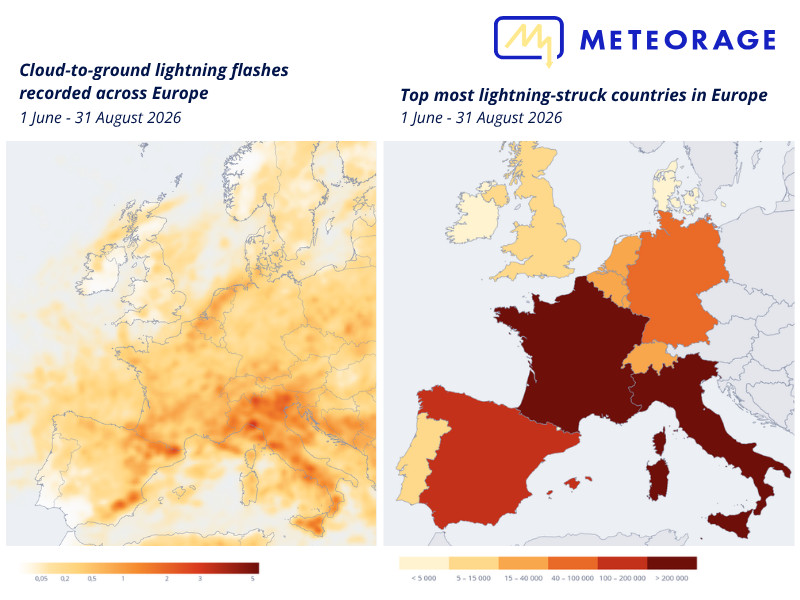 The analysis revealed substantial differences in lightning activity between European countries and regions.
Italy remained among the continent’s most lightning-prone countries, while Portugal and southwestern Spain experienced relatively low levels of electrical activity.
The UK also recorded fewer flashes than major continental countries including Italy, France and Spain.
These variations can be influenced by several factors, including atmospheric instability, moisture, temperature, geography and the movement of individual weather systems.
A single season’s lightning figures should not, by themselves, be treated as evidence of a long-term climate trend. However, monitoring the frequency, location and intensity of severe storms is becoming increasingly important as communities and infrastructure prepare for weather-related risks.
A warmer atmosphere can hold more moisture, potentially increasing the intensity of rainfall when suitable storm conditions develop. The relationship between climate change, thunderstorms and lightning remains complex, however, and can differ considerably by location and season.
Data Supports Weather-Risk Planning
Meteorage’s study is based on information collected through its lightning detection network, which has been operating since 1989.
The company says the system detects more than 98% of lightning flashes and provides a location accuracy of approximately 100 metres.
Long-term detection records can help scientists and organisations examine how electrical activity changes over time, while near-real-time information can support decisions during dangerous weather.
Accurate lightning monitoring is particularly important for industries including aviation, renewable energy, construction, agriculture, transport and events, where rapidly developing storms can create significant safety and operational risks.
Summer 2026 may not have broken Europe’s long-term lightning records, but its severe outbreaks demonstrated that seasonal totals alone do not always reflect the disruption individual storms can cause