UK Sustainability Leader Calls for Regenerative Business Models Amid Growing Climate Threats

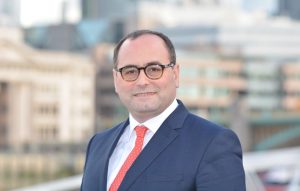
James Payne is a leading voice in sustainable transformation and regenerative business strategy. As the Global Head of Purpose of Business at Forum for the Future, he helps organisations navigate today’s complex, interlinked crises with purpose-led innovation and systems thinking.
With a background spanning senior roles at Diageo, Given London, and as lead author of A Compass for Just and Regenerative Business, James brings deep expertise in turning sustainability from a risk conversation into an opportunity for long-term, adaptive growth.
In this exclusive interview with Champions Speakers Agency, he shares insights on the urgent sustainability priorities for modern business, the mindset shift required to lead in a polycrisis world, and how authentic communication can accelerate systemic change.
Q: Given the complex challenges facing today’s economy, which sustainability issues should business leaders treat as most urgent—and how can they begin to respond in a meaningful, sector-relevant way?
James: “The most pressing issues for any specific business will be as unique as the business themselves. The most relevant, most material issues will completely depend on the sector that you’re in, what your business does. So, you know, it’s hard to answer that question generically.
“Obviously though, there are some issues that are really time critical. Climate in particular is—we know that we have a narrow window of opportunity, you know, over the balance of this decade, probably the next sort of five to six years, where we still have an opportunity to mitigate the worst impacts of climate breakdown.
“We need 50% decarbonisation by the end of this decade in order for that to really be possible. So we need a massive transformation across all sectors, and we also need that to happen rapidly to avoid some of the critical tipping points that we know we will cross if we don’t take that action. So that’s an obvious one.
“But, you know, when we look at the rate of biodiversity loss, how particularly after the pandemic the numbers on inequality are really going in the wrong direction in many places—I think what business leaders are facing is really a polycrisis. So multiple, very challenging contextual issues that are all interrelated and compounding.
“So it’s not like climate change is just an environmental issue. It’s also clearly a very big social issue with huge health implications and it’s interconnected with nature and inequality. And, you know, not addressing those interconnected issues will make every one of those issues worse as they compound.
“But then also positively, successfully addressing some of those issues and finding solutions that solve for multiple issues simultaneously, taking smarter, more effective approaches to really get to the root causes of some of these challenges, can have compounding benefits as well.
“So I think there’s many, many issues, but what’s important is that you’re approaching them in the right way, with the right sense of urgency, but also understanding the interconnections and not trying to address issues in isolation. And really what’s needed for that is a new way of thinking and acting.
“What I see a lot with the business leaders that are most successfully navigating this is an understanding that the operating context that their businesses are facing is fundamentally different now than it was for the relatively stable and benign operating context that most senior business leaders have enjoyed for most of their careers.
“We’ve seen in IKEA, they’ve moved away from fixed strategy roadmaps to just using scenario planning for their business planning because they recognise how volatile their operating context is—their value chains.
“And therefore, the idea that you can map out what you’re doing for the next eight quarters or however long is just a complete fallacy. So they’ve shifted to scenario planning for their business planning.
“And I think what we’re increasingly seeing is enlightened business leaders understanding that and really making the very difficult choice of facing into it and understanding that they need to think and act differently and embracing a new approach to managing their businesses.”
Q: With increasing scrutiny around greenwashing and regulatory pressure from regions like the EU, how can businesses communicate their sustainability ambitions authentically—without falling into the trap of either overstatement or silence?
James: “Yeah, that’s a question that many of the businesses that I work with are wrestling with. I think there’s a lot of concern currently around greenwashing, and rightly so, you know, particularly with the reputational risks around it, but also with all of the regulation that we’re seeing coming through, particularly from the EU.
“Yeah, it’s a big concern for businesses. Obviously, there’s a lot of backlash as well in places like North America and the politicisation of ESG.
“So, I think what we are seeing more and more is green hushing, where businesses are doing really good stuff around sustainability but are not communicating it or not talking about it.
“And that is an issue, that is a problem because, you know, to make progress on these issues, we need many, many businesses, all of the incumbents and all of the businesses across key sectors to be taking action and to be being seen to be taking action and to sort of create that sense of momentum.
“So, talking about what you’re doing, talking about your goals, talking about what you’re achieving, sharing what you’re learning is central to creating the broader, more systemic impact that’s needed.
“So, we’re real proponents at Forum for the Future of what we call green doing—so taking, you know, setting ambitious targets, taking bold action and communicating the actions that you’re taking and the ambitions that you’re setting.
“It’s not always about only communicating what you’ve already done. Obviously, it’s good to have a track record and good to have substance behind what you’re doing.
“But there is real power also in communicating your ambition for what you want to achieve, because in that ambition, that will attract partners, collaborators and people that want to be part of realising that vision.
“So, we would really advocate the communication both of bold ambitions, but also of the actual tangible substance that sits behind that. And it’s also about engagement and being kind of authentic about what you’re struggling with.
“So we’d always say it’s better to aim high and set a target based on what the world needs and make a really good effort to achieve that and engage authentically around that and communicate, you know, if you are falling short, what you’re struggling with—rather than setting a really low achievable target that isn’t what’s needed and easily achieving it. That isn’t going to get us where we need to get to.”
Q: Many organisations aspire to move beyond harm reduction to regenerative, net positive models. In your experience, what is the greatest internal barrier to achieving that shift—and how can leaders begin to overcome it?
James: “Yeah, it definitely follows on from my last question.
“So, I think people often talk about the technological challenges or the lack of the right regulatory environment, but in all of my experience of working with business, the biggest challenge to moving to net positive or regenerative approaches to business is really your mindset.
“What’s needed is a fundamentally different way of thinking and acting—to move away from a way of thinking and acting that worked very well in a stable, benign operating context.
“Many people have built their entire careers—many business leaders have built their entire careers—based on a very mechanistic way of working, where you address issues in silos, break stuff down into smaller parts, and specialism is rewarded.
“And hierarchy, taking time to make the right decision, is more important than making a quick decision. Standardising things globally is seen as a smart approach.
“But as we’re facing this polycrisis and increasingly volatile and uncertain business operating context, what’s needed is a much more agile, responsive, adaptive and context-specific approach.
“That is a very different way of running and managing a business than a more slow-moving, top-down, siloed way of working. And it’s a challenge.
“It’s a real challenge. No amount of having the right strategy or the right technology will overcome a mindset that isn’t future-fit and that isn’t facing into the new reality of the more volatile and more uncertain operating context that businesses face.
“And really, that mindset is characterised by understanding that you might need to delegate authority much more, and enable people in your business to be much more adaptive and have the authority to create solutions that respond to a rapidly changing context and are context-specific.
“It’s about co-creating solutions with partners, with customers, with your suppliers, rather than imposing solutions or thinking that you’ve got the answer.
“It’s about looking at possibility and bringing in ingenuity. Particularly when it comes to sustainability, a lot of the track record has been around risk mitigation and avoiding reputational harms.
“And I think increasingly, the sources of value from sustainability—and what’s needed in this more volatile context—is a much more ingenious, creative approach where you are seeing the potential to address interconnected issues together. The huge amount of value that can be created by that more ingenious approach that maximises co-benefits.
“But it’s challenging. As a business leader, typically you’ve had a successful career with a certain way of thinking and acting, and being asked to think and act differently can be quite confronting. So I think there is a certain amount of humility needed as well—to acknowledge the reality of the new context you’re facing.
“And also that the things that have gotten you to where you are in your career—the ways of thinking and acting that have served you so well up until now—may not serve you well in the future. And you need an openness to grow and change course.”
This exclusive interview with James Payne was conducted by Jack Hayes.