Rwanda to Empower 100,000 Cassava Farmers with Food Security and Climate Resilience Initiative
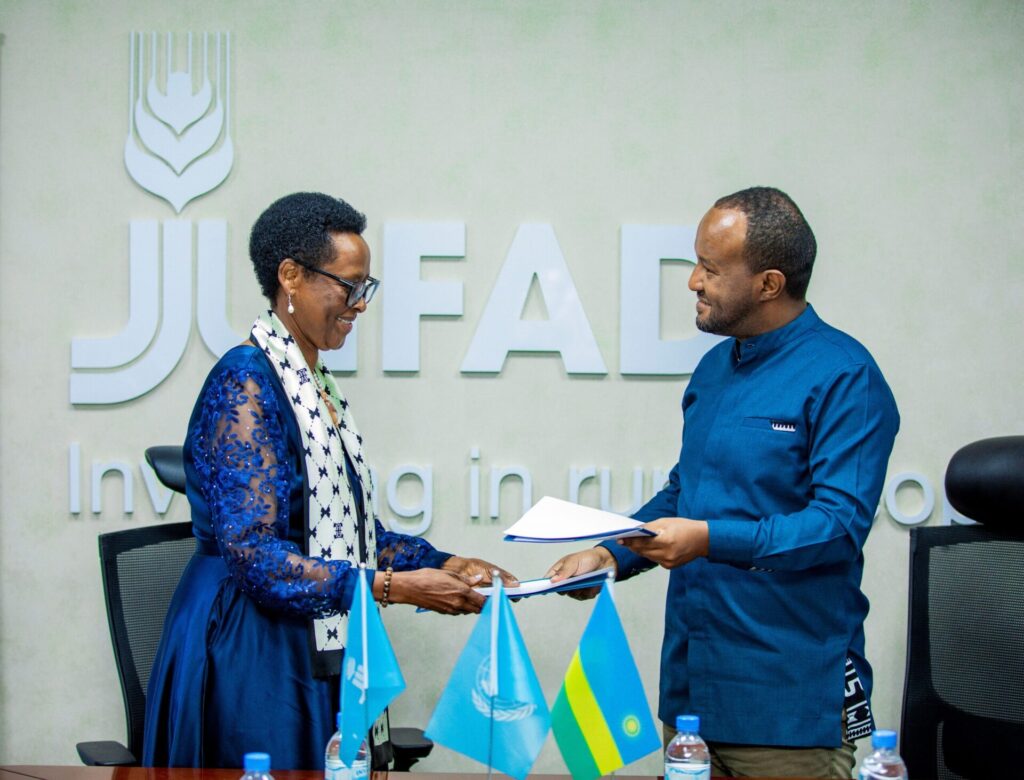
Kigali, Rwanda, 22 January 2024
A transformative project aimed at improving food security and building climate resilience for over 100,000 cassava farming households across Rwanda has been launched. The initiative, a partnership between INGABO Syndicate Farmers and the United Nations International Fund for Agricultural Development (IFAD), is backed by a $2 million investment.
The program, named SCORE Rwanda (Strengthening Smallholder Farmers’ Resilience to Crises for Improved Food Security and Livelihoods), focuses on enhancing cassava production, strengthening market access, and equipping farmers with the tools and knowledge to combat the challenges of climate change. Women will account for over half of the participants, and nearly 20% of the beneficiaries will be young farmers.
Empowering Smallholder Farmers
Kantarama Cesarie, President of the INGABO Farmers’ Syndicate, emphasized the importance of the initiative:
“Small-scale farmers are the backbone of Rwanda’s food system, and their resilience is critical to our nation’s food security. This project empowers them with the knowledge, tools, and resources they need to thrive, increasing production, enhancing market access, and building resilience to climate change. It’s about strengthening the livelihoods of thousands of Rwandan families.”
Dagmawi Habte-Selassie, IFAD’s Country Director for Rwanda, highlighted the project’s broader impact:
“This initiative exemplifies IFAD’s commitment to sustainable and inclusive food systems. By investing in smallholder farmers, we can boost food security, build resilient rural communities, and contribute to Rwanda’s economic growth. The interventions in post-harvest systems and market linkages will ensure a sustainable cassava value chain.”
Cassava: A Resilient Crop for Food Security
Cassava is a vital crop in Rwanda, cultivated on 147,320 hectares, or 5.6% of the country’s territory. It ranks second in production after bananas and supports over 700,000 families, particularly in drought-prone regions. Despite its importance, limited value addition has constrained its export potential.
This project seeks to address these challenges by:
- Improving production using clean, improved seeds and innovative techniques like the Zai Pit method to enhance soil fertility and water retention.
- Promoting Good Agricultural Practices (GAP) and advanced post-harvest handling and storage methods.
- Raising climate resilience through training on adaptation strategies, climate-smart technologies, and early warning systems.
Sustainable Development Through Farmer-Led Action
As a farmer-led organization, INGABO will play a pivotal role in ensuring the project’s sustainability. The initiative will build INGABO’s capacity in project management, knowledge dissemination, and monitoring. By strengthening cooperatives, the project will create long-term benefits for farmers across the cassava value chain.
Additionally, the program will generate new job opportunities, particularly for women and youth, by improving access to financing and linking farmers to better market opportunities.
Reaching 10 Key Districts
The SCORE Rwanda initiative will directly benefit farmers in 10 districts: Kamonyi, Muhanga, Ruhango, Nyanza, Gisagara, Nyamasheke, Rusizi, Bugesera, Gatsibo, and Kayonza.
Backed by funding from the Global Agriculture and Food Security Program (GAFSP) and implemented under IFAD supervision, the project represents a critical step toward ensuring food security and sustainable livelihoods for Rwanda’s smallholder farmers.
This initiative underscores the role of collaborative efforts in addressing food insecurity, climate change, and rural development, setting a benchmark for agricultural resilience in Africa.